
Mozambique transformation summary
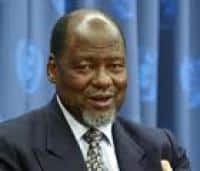
The Mozambique transformation from devastating civil war and aid dependency is a remarkable story of our times. As such, the Mozambique experience illustrates a profound point about Super Radiance. However hopeless the situation appears, however intractable the problems are, a national leader now has the capability to create a seismic shift in the quality of life. And this applies to any government, leading politician or even an NGO.
Simply put a bold actor can quietly instigate a shift in the collective consciousness of the population. The result of this is to initiate a powerful, positive and permanent impact on the destiny of their country.
In summary, in the early 1990s, the global Super Radiance group, recently set up in India, had a strong influence on Mozambique. An early outcome from global Super radiance was a decline fighting everywhere in the world. And like other countries this reduction in violence also took place in Mozambique.
This easing of the situation gave President Chissano an opportunity, which to his credit he took with enthusiasm. Accordingly, he created a number of TM based coherence groups or Super Radiance groups around the country. Following that enlightened approach, the immediate effect was to end the fighting altogether. The groups also precipitated an economic revival.
Essentially, the more peaceful atmosphere paved the way for the two main rival factions to negotiate permanent settlements. With peace breaking out, they could then develop mutually acceptable economic and constitutional reforms. in the more harmonious atmosphere these took hold and prospered.
The results, among other factors were a 12.4% economic growth rate, inflation reducing from 70% to 2%. there was also a liquidation of the national debt.
Starting point – Mozambique’s desperate plight

By 1992, the Mozambique people had endured twenty-seven years of almost continuous warfare. First came the fight against Portuguese colonial rule. This culminated in the withdrawal of the Portuguese in 1975.
Unfortunately powerful external forces constrained Mozambique’s true ‘independence’.
In effect, the country became a pawn in ruthless Cold War rivalry. Consequently, like many other former colonies, Mozambique turned into a surrogate battleground for the Super Powers.
A terrible civil war then raged. This was between the Marxist leaning government, on the one hand and the rebel organization Renamo. The Soviet Union was backing the government and the west-supporting South African apartheid regime backed Renamo. The reason being that South Africa was fearful of having a Marxist controlled neighbour. In addition, the South Africans were determined to destabilize possible supporters of the African National Congress Party at home.
The ongoing war devastated Mozambique.
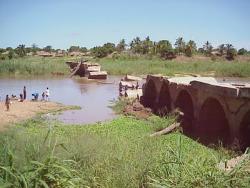
The devastation from this rivalry in Mozambique was immense. Observers reckon that at least one million people lost their lives and five million became displaced. Bear in mind, this is out of a population of only 19 million people.
The economy went to rack and ruin, with the chaos and violence wrecking the infrastructure. Likewise both factions carpeted the countryside with landmines. The knock on effect was to chronically debilitate both agriculture and village life.
Here in Mozambique we also saw the arrival of a sinister new military weapon, in the form of the child soldier.
Renamo indoctrinated thousands of teenage children into becoming robotic, fearless, heartless butchers. These children rampaged the countryside, pillaging and murdering and dragging the country further down the road of annihilation.

By 1987 Mozambique’s disintegration led it to be to the poorest country in the world. The combination of war, ideological zealotry and drought meant the country was dependent on international food aid simply to survive.
Inflation was rampant at 70%, with zero economic growth. Consequently, the threat of starvation had become an oppressive reality haunting most of the inhabitants. And to compound the misery, the whole of South East Africa was suffering the worst drought for over a century.
Breakthrough with the Mozambique transformation
Mozambique finally got a break for two reasons.
Firstly in 1989 there came the upsurge in world coherence that was caused by the first group of 7,000 TM-Sidhas. This achieved world super radiance that precipitated a chain of events globally. A major result was the unprecedented and rapid cessation of the Cold War. Tellingly, this also meant the collapse of the government’s external sponsor, the Soviet Union. (See International peacekeeping).
This seminal event in world history had an immediate knock-on effect for Mozambique with two factors coming into play. Firstly there was the reduced pressure from external forces. These had previously fueled local hostilities. The second factor was of course with the calamitous economic situation. The combination of these two meant that both sides were more open to compromise. With the result that the government was able to to negotiate a fragile peace with the rebels.
Secondly, during 1992 Mozambique’s then President, Joaquim Alberto Chissano, learned the Transcendental Meditation (TM) technique. This proved to be a formative event in his life, as the experience led him to persuade, first his immediate family, and after that, his cabinet to take up the daily practice as well.
Integrating TM into government administration
| “First I started the practice of Transcendental Meditation myself, then introduced the practice to my close family, then to my cabinet of ministers, then to my government officers, and then to the military. The result has been political peace and balance in Nature in my country … ” –Former President Joaquim Alberto Chissano of Mozambique |
Chissano soon began to integrate the practice of TM in the administration of his country.
“I had a group of coherence creating individuals next to my office. When representatives from other organizations came to me for a meeting, they were all expecting strong disagreements. However, the atmosphere was so relaxed, we were like old friends meeting after a long time.” (Read brief summary of research showing the impact of TM on the cortisol and serotonin levels of people nearby to a group of meditators)
President Chissano triggers the Mozambique transformation with TM in the armed forces
It was during this period that Chissano managed to secure the General Peace Agreement in 1992. This finally ended the war and began the process of demobilization.
Building on his initial success, Chissano and his government decided to introduce Transcendental Meditation to the armed forces and the civilian population. Therefore, during 1992 and 1993, the government ordered all military and police recruits to meditate for 20 minutes, twice a day.
Within a short space of time more than 16,000 soldiers and 30,000 civilians were taught TM. 3,000 of these meditators were trained in the more advanced TM-Sidhi programme. This figure of 3,000 is highly significant as the Super Radiance factor (the square root of 1% of the population) for Mozambique is actually only 435 TM-Sidhas grouped in one place.
Initially many of these people meditated in large groups. However, when the military demobilisation got underway from about 1994 onwards, as stipulated in the General Peace Agreement, the larger groups started disbanding.
Negative trends emerge when the groups declined in size
As the military demobilized, Lt. General Tobias Dai, then Commander of the Armed Forces, and more recently the General Secretary of the Ministry of Defence, noticed a negative trend emerging.
“What is very clear is that once you create the positive effect, if you then stop the group practice (of TM), the previous tendencies of higher collective stress, as determined from the crime indexes and the tense situations in the country, begin to rise again. In 1994, there was a remarkable decrease in coherence in the country as a result of decreased participation in the group practice of the Transcendental Meditation and TM-Sidhi Programme…” Lt. General Tobias Dai.
Even so the initial uplift in coherence had a lasting impact. This was due to both the larger groups of TM-Sidhas and also the surge in TM teaching across the country. The result was that from 1992 onward, there started a rapid process of economic renewal.
By 1993 even objective outside observers were seeing the effects.
For instance on 22nd February 1993, The New York Times reported: “Mozambique has unexpectedly emerged as a candidate for an African Success story. We have a combination of peace and rain which has not been seen in Mozambique for a quarter of a century.”
| “Mozambique has unexpectedly emerged as a candidate for an African Success story. We have a combination of peace and rain which has not been seen in Mozambique for a quarter of a century”. New York Times |
President Chissano certainly attributes the cessation of hostilities in Mozambique and the ensuing development of his country to the effect of Transcendental Meditation. Here are some of the highlights.
Situation prior to achieving national coherence
• Prolonged civil war and violent political rivalry.
• One million killed and 5 million displaced as refugees.
• Radical Marxist policies inhibiting economic activity.
• Zero growth rate.
• Inflation at 70%.
• Massive overseas debt.
• Unrelenting drought.
• Chronic dependence on overseas food aid to stave off starvation.
Benefits achieved once Super Radiance for Mozambique had been reached
• Conversion to stable democratic government and free market reforms.
• The only successful UNO mission in the world at the time.
• Annual growth rate of 12.4%, the highest in Africa.
• Inflation dropped to 2% by 1999.
• Reduction of national debt to zero.
• Drought ending in November 1992.
• Overall drop in crime level.
• Drop in car accidents despite a tripling of road traffic.
• Resurgent agriculture with foreign food aid no longer needed.
• Most stable currency in Africa.
Chissano, a committed Roman Catholic says, “People ask me if this is a religion. I have explained to them that I may keep my religion but I should take advantage of this science and make maximum use of it. We will not stop praying in our churches, we will not stop praying in our mosques, we will not stop praying in our synagogues, but we will make an appeal to the support of Nature through the application of this technology (of consciousness).”
It could have been a lot worse – Look at Angola …
We must remember that the unfolding of events could have been a lot worse. As a comparison, Mozambique’s experience is in stark contrast to the hapless Angolans. As it happened, Angola also endured a civil war following independence from Portugal. But in their case the country lacked the key Super Radiance factor. Hence the civil war, exacerbated by international rivalry and entanglements, dragged on for a further ten years after Mozambique.
Angola’s ongoing conflict spawned a disastrous humanitarian crisis. There were a harrowing 4.28 million people, or one-third of the total population, displaced. According to United Nations’ estimates in 2003, 80% of Angolans still lacked access to basic medical care. Similarly 60% lacked access to water, and 30% of Angolan children would die before the age of 5. This meant that the overall national life expectancy was less than 40 years of age.
And also Somalia …
Another sorry example of the best international intentions being dashed was in Somalia.
Peace negotiations in Somalia began in January 1993 under the auspices of the UN. These were aimed at a transition to democracy. The UN involvement enabled the support of 28,000 UN peacekeeping troops. But the presence of this many troops still failed to lead to progress. In the end the UN contingents were forced to withdraw. The country then continued to suffer civil conflict and fragmentation throughout the 1990s.
All the Somalians needed was 310 TM-Sidhas.
It is the World Peace Group’s objective to help set up TM-based Super Radiance groups in any situation where there is the need. With your help we can achieve similar remarkable transformations in the peace and welfare of communities and countries. Please consider joining us by making a monthly donation.
We are pleased to work with any significant donors, government agencies, NGOs or community groups who are motivated to help areas of specific concern to them.
Article sources
The main source is a research study conducted by Guy Hatchard Ph.D and Kenneth Cavanaugh Ph.D.
The title of their research is “The Peace and Well Being of Nations: An Analysis of Improved Quality of Life and Enhanced Economic Performance through the Maharishi Effect in New Zealand, Norway, USA, Cambodia, and Mozambique. A Longitudinal, Cross-Country, Panel-Regression Analysis of the IMD Index of National Competitive Advantage. (Read abstract)
The paper examines the positive influence of the Super Radiance effect, or ‘Maharishi effect‘ in five very different nations. The research assesses two countries using a broad-based international measure of economic performance and quality of life.
Follow us


 Thanks for sharing 🙂